In 1902, Elizabeth Phipps Train was described as an author whose name was “widely known,” at least in regard to the literary scene in Boston, Massachusetts. She had, after all, penned several novels, and she made the list of “Best American Authors” in a 1900 short story anthology that includes three of her tales.
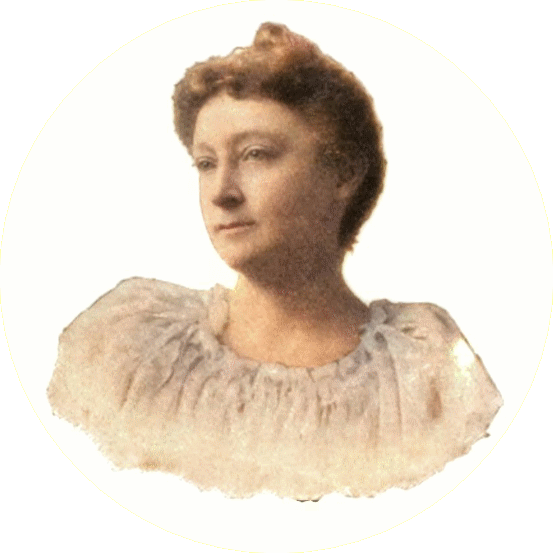
Perhaps celebrity did not agree with her, though. Train appears to have stopped writing not long after achieving these honors. Searching the usual online archives, I haven’t found any works by her or mentions thereof published after those short stories from 1900. She seems to have taken up traveling while also falling off the literary map.
I mention this because I’m embarking on a project that has prompted me to investigate her biography. On the one hand, there’s pretty good evidence that Train was born in 1856. On the other, the only evidence I’ve found of when she died comes from a genealogy site, which says 1940 — but without solid documentation in the form of, say, a death certificate or a newspaper obituary to confirm that year.
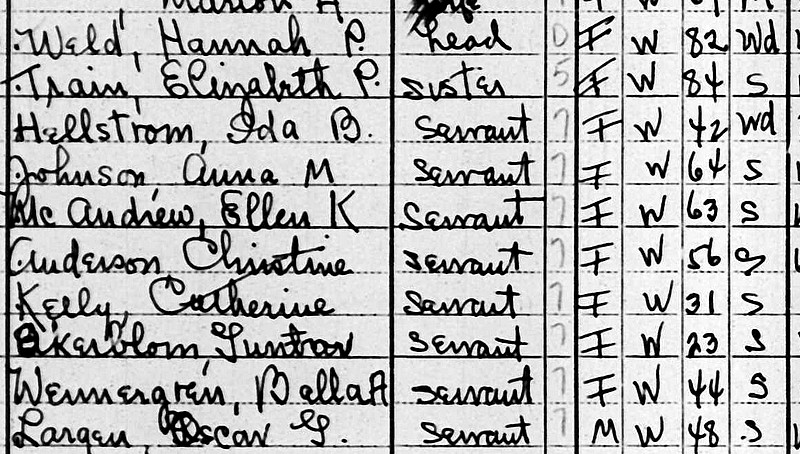
I have reason to believe that might be wrong, though. The U.S. census reveals that in April of 1940, Elizabeth P. Train was a single woman living in Brookline, a town near Boston, with her widowed sister, Hannah P[utnam] Weld (and a bewildering number of servants). That’s not the problem. Train could have died later in the year.
The problem is found in a Boston Globe article from 1943 with the headline “Hannah P. Weld, Brookline, Leaves Sister $100,000.” The piece says that Weld died in February of that year and then implies that “Elizabeth P. Train, Brookline, sister,” was still around to inherit that goodly sum. In other words, on the surface, it looks as if Train hadn’t died a few months after the census taker had visited in 1940.
Now, the Globe article does say, “The will was drawn in 1937.” It’s possible the reporter hadn’t checked to see if the woman named in the will and in the headline was still alive. It’s possible the reporter had never heard that the once-famous author had died a few years earlier. That’s some pretty shabby reporting, though, especially for such a respected journal. The really frustrating thing is that, despite Train’s earlier acclaim — despite her being related to a Boston Brahmin family — I can’t find even one obituary or tribute written about the author that would help settle the year she died. I’m hoping someone who reads this can help me solve this little mystery.
[UPDATE! An obituary has been located, and it confirms that Train died in 1940. Read more about that here.]
In the meantime, let me share something amusing that I found in my research. It’s from the 1910 census. Train was living in Boston and — sandwiched between the likes of a scrub women in the hotel business and a merchant engaged in dry goods sales — we find her specific occupation and general field:

She was an Author in the Stories industry.
— Tim
(Posts identified as “The Scarlet Pencil” chronicle my meandering through the misty and mysterious quagmire of editing books.)

 BROM BONES BOOKS