Click here for A Key to the Chronological Bibliography of Early Occult Detectives. There, you’ll find an explanation for this bibliography’s hyperlinks, the four types of occult detective, and a three-part explanation of how I settled on a definition for occult detective fiction.
GO TO THE EARLY 1900s PAGE
THE 1800s
1817
Doktor K. appeared in E.T.A. Hoffmann’s short story “Das öde Haus,” a part of Nachtstücke. It was translated into English as “The Mystery of the Deserted House” for Hoffmann’s Strange Stories (Burnham Brothers, 1855, pp. 428-44) and as “The Deserted House” for Library of the World’s Best Mystery and Detective Stories (Review of Reviews, 1907, pp. 131-56). This tale is included in Ghostly Clients & Demonic Culprits: The Roots of Occult Detective Fiction (Brom Bones Books, 2019). Doktor K. investigates a supernatural mystery as a founding doctor-detective, and he has clairvoyant abilities. Read more about why, despite reservations, this character ultimately qualifies for this bibliography in “Is E.T.A. Hoffmann’s Dr. K. Too Early to Be an Occult Detective?”
1831
Cuthbert Forster appeared in Charles May’s short story “The Haunted House,” published in Pocket Magazine 2 (1831) pp. 253-59. This early “dare to spend a night in a haunted house/room” tale has interesting parallels to B.M. Croker’s better known “Number Ninety,” linked below under 1895. Forster investigates a supernatural mystery as a founding novice-detective.
1840
Dirk Ericson appeared in Henry William Herbert’s short story “The Haunted Homestead,” published in three parts in The Ladies’ Companion and Literary Expositor: “The Murder” (13.8 [Aug., 1840] pp. 185-87), “The Mystery” (13.9 [Sept., 1840] pp. 227-30), and “The Revelation” (13.10 [Oct., 1840] pp. 265-68). This tale is included in Ghostly Clients & Demonic Culprits: The Roots of Occult Detective Fiction (Brom Bones Books, 2019). Assisted by Asa and Enoch Allen, Ericson investigates a crime with supernatural elements as a founding novice-detective. Read more about this story and its role in the founding of detective fiction in “Dirk Ericson: America’s First (Occult) Detective?”
1855
Harry Escott appeared in Fitz-James O’Brien’s short story “The Pot of Tulips,” published in Harper’s New Monthly Magazine 11.66 (Nov., 1855) pp. 807-14. Four years later, Escott reappeared in O’Brien’s short story “What Was It? A Mystery,” published in Harper’s New Monthly Magazine 18.106 (Mar., 1859) pp. 504-10. Both cases are reprinted in From Eerie Cases to Early Graves: 5 Short-Lived Occult Detective Series (Brom Bones Books, 2022). Assisted by Jasper Joye in the first story and by Dr. Hammond in the second, Escott investigates supernatural mysteries as a founding specialist-detective.
1859
An unnamed narrator appeared in Edward Bulwer-Lytton’s novella “The Haunted and the Haunters; or, The House and the Brain,” published in Blackwood’s Edinburgh Magazine 86.526 (Aug., 1859) pp. 224-45. It was republished in Bulwer-Lytton’s collection A Strange Story; and the Haunted and the Haunters (Routledge, Warne & Routledge, 1864, pp. 325-43), though Bulwer-Lytton edited it to make it seem less like “A Strange Story.” This abridged version often appears in subsequent anthologies, but the original version was republished about fifty years later (Rajput, 1911). This is an important and influential “dare to spend a night in a haunted house/room” tale. This character investigates a supernatural mystery as a founding specialist-detective.
1861
An unnamed narrator appeared in Bayard Taylor’s “The Haunted Shanty,” published in Atlantic Monthly 8.45 (July, 1861) pp. 57-72. It was reprinted in Taylor’s collection At Home and Abroad: A Sketch-book of Life, Scenery and Men (second series, Putnam, 1862, pp. 473-509). This tale is included in Ghostly Clients & Demonic Culprits: The Roots of Occult Detective Fiction (Brom Bones Books, 2019). This character investigates a supernatural mystery as a founding novice-detective with some characteristics of a doctor-detective. Read more about this mystery’s lack of final resolution in “Crossing Great Distances: Bayard Taylor’s ‘The Haunted Shanty’.”
1862
Ralph Henderson appeared in Charles Felix’s novel The Notting Hill Mystery, run in eight installments in Once a Week 7 (Nov. 29th, 1862) pp. 617-22; (Dec. 6, 1862) pp. 645-50; (Dec. 13, 1862) pp. 673-78; (Dec. 20, 1862) pp. 701-07; 8 (Dec. 27, 1862) pp. 1-7; (Jan. 3, 1863) pp. 29-35; (Jan. 10, 1863) pp. 57-64; and (Jan. 17, 1863) pp. 85-92. The novel was then reprinted in one volume (Bradbury & Evans, 1863; Saunders, Otley, 1865; British Library, 2012). This is often said to be the first mystery novel in the English language. Charles Felix was a pen name used by Charles Warren Adams. Henderson investigates a crime with supernatural elements as a founding novice-detective. Read more about Henderson’s reluctant acceptance of the supernatural in “To Investigate Matters Otherwise Quite Beyond My Province: Charles Felix’s Ralph Henderson.”
1865
Berrington and Markham appeared in M.A. Bird’s “The Haunted House,” first published in Spell-Bound (London: John Maxwell, 1865, pp. 72-99). This is a “dare to spend a night in a haunted house/room” tale. First, Berrington investigates a supernatural mystery with criminal roots as a novice-detective, then his friend Markham becomes a novice-detective to investigate the mystery of what happened to Berrington.
1866
Mr. Burton appeared in Seeley Regester’s magazine serial The Dead Letter, run in Beadle’s Monthly. The following year, the novel reappeared in one volume (Beadle, 1867), and much later, it was reprinted with another mystery by Regester in The Dead Letter and the Figure Eight (Duke University Press, 2003). This work is often said to be the first American mystery novel and the first mystery novel written by a woman. Seeley Regester was a pen name used by Metta Victoria Fuller Victor. Assisted by Richard Redfield, Burton investigates a crime as a founding divining-detective. Read more about this novel in “Re-Licensing Seeley Regester’s Mr. Burton.”
1868
An unnamed narrator appeared in the anonymous “The Ghost of Stanton Hall,” first published in New Monthly 142.565 (Jan., 1868) pp. 86-102. This tale is included in Ghostly Clients & Demonic Culprits: The Roots of Occult Detective Fiction (Brom Bones Books, 2019). This is a “dare to spend a night in a haunted house/room” tale. This character investigates a supernatural mystery as a novice-detective.
1869
Dr. Martin Hesselius appeared in Joseph Sheridan Le Fanu’s novella “Green Tea,” run in four installments in All the Year Round 2.47 (Oct. 23, 1869) pp. 501-04; 2.48 (Oct. 30, 1869) pp. 525-28; 2.49 (Nov. 6, 1869) pp. 548-22; and 2.50 (Nov. 13, 1869) pp. 572-76. Hesselius’s “immense collection of papers” then served as a framing device when “Green Tea” became the first story in Le Fanu’s collection In a Glass Darkly (R. Bentley & Son, 1872), which appeared as Volume 1, Volume 2, and Volume 3. The additional works, which do not spotlight Hesselius himself, are “The Familiar,” “Mr. Justice Harbottle,” “The Room in the Dragon Volant,” and “Carmilla.” The collection was later republished in one volume (Richard Bentley & Son, 1886). Multiple reprints are currently available. Hesselius investigates a supernatural mystery (and collects reports on others) as a founding doctor-detective.
Robert Pritchard appeared in Samuel Williams’ “Hu Hirwan’s Ghost,” first published in Overland Monthly 2.1 (Jan., 1869) pp. 83-96. This is a “dare to spend a night in a haunted house/room” tale. Though Pritchard’s experience with the title specter changes him from a skeptic to a believer—a typical novice-detective trait—he has impressive experience at investigating sites said to be haunted. Therefore, in this tale, he investigates a supernatural mystery with criminal roots as a specialist-detective.
1873
An unnamed narrator appeared in Maurice Davies’ short story “A Night in a Ghost-Chamber,” published in Belgravia 19 (Jan., 1873) pp. 377-85. Assisted by Tom Chambers and others, this character investigates a supernatural mystery as a novice-detective. (Though he admits to having a “weakness for the so-called ‘supernatural’,” his reactions in the title chamber reveal a lack of preparation.)
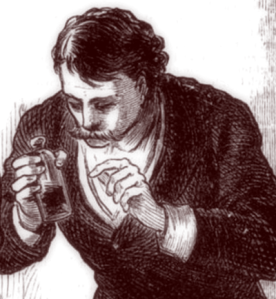
An unnamed narrator appeared in the anonymous short story “A Needle in a Bottle,” published in Frank Leslie’s Pleasant Hours 15 (Nov. 1873) pp. 294-301. This tale is included in Ghostly Clients & Demonic Culprits: The Roots of Occult Detective Fiction (Brom Bones Books, 2019). This character investigates a supernatural mystery as a doctor-detective, one who is also familiar with cases involving “supernatural agency.” Read more about this character, who broke the mold of the German doctor who investigates the supernatural, in “The First American Doctor-Detective?: The Protagonist of ‘A Needle in a Bottle’.”
1875
Henry Patterson appeared in Charlotte Riddell’s short novel The Uninhabited House, published in Routledge’s Christmas Annual (George Routledge & Sons, 1875). It was then reprinted with another novel by Riddell in The Uninhabited House and The Haunted River (George Routledge & Sons, 1883, pp. 9-183; Chatto & Windus, 1885). More recently, E.F. Bleiler included it in the collection Five Victorian Ghost Novels (Dover, 1971), and Richard Dalby included it in the collection The Haunted River & Three Other Ghostly Novellas (Sarob, 2001). Assisted by Dr. Ned Munro, Patterson investigates a supernatural mystery with criminal roots as a novice-detective.

1881
Lady Julia Spinner appeared in the anonymous “Wanted–An Explanation,” first published in four parts in Household Words 1.6 (June 4, 1881) pp. 104-06; 1.7 (June 11, 1881) pp. 124-27; 1.8 (June 18, 1881) pp. 143-47; and 1.9 (June 25, 1881) pp. 164-66. This novella is included in Ghostly Clients & Demonic Culprits: The Roots of Occult Detective Fiction (Brom Bones Books, 2019). Lady Julia investigates a supernatural mystery as a specialist detective. Read more about this story, which is probably more importantly historically than artistically, in “Haunted by Irresolution: ‘Wanted–An Explanation’.”
1882
An anonymous narrator and Mr. Yule appeared in Julian Hawthorne’s “The House Behind the Trees,” first published in Our Continent 1.3 (Mar. 1, 1882) p. 38). The author was Nathaniel Hawthorne’s son (and, unfortunately, this tale hardly lives up to that literary lineage). These characters investigate a supernatural mystery with criminal roots as novice-detectives, despite the narrator’s claim of being “rather fond of marvels.” Read more about the lackluster but short story in “A Minor Gem: Julian Hawthorne’s ‘The House Behind the Trees’.”
Theophilus “Phil” Edlyd appeared in Charlotte Riddell’s short story “The Open Door,” a part of her collection Weird Stories (J. Hogg, 1882, pp. 48-103; Chatto & Windus, 1884; Home and Van Thal, 1946). This tale is included in Ghostly Clients & Demonic Culprits: The Roots of Occult Detective Fiction (Brom Bones Books, 2019). Edlyd investigates a supernatural mystery as a novice-detective.
Father Ambrosio Martinez appeared in Eliot Ryder’s “The Mystery of the Cathedral of Chihauhau,” first published in Ballou’s Monthly 56.5 (Nov., 1882) pp. 461-65. The case involves ghostly footprints, a terror-striken assistant, an ill-fated dog, a formless figure with eyes, and other elements blatantly plagiarized from Edward Buwler-Lytton’s “The Haunted and the Haunters; or, The House and the Brain.” (See 1859 above.) Martinez investigates a supernatural mystery as a specialist-detective.
1884
An unnamed narrator appeared in Angelo J. Lewis’s short story “My Only Ghost,” published in Mayfair Magazine 1.3 (Feb., 1884) pp. 289-300. This comical character investigates a supernatural mystery as a specialist-detective.
1887
Professor Althaus appeared in F.C. Philips’ novel The Strange Adventures of Lucy Smith (Swan Sonnenschein, Lowrey, 1887; George Munro, 1887; J.W. Lovell, 1887). Althaus investigates a supernatural mystery with criminal roots as a specialist-detective, one who has medical knowledge and who locates the criminal with a form of divination.
1888
An unnamed narrator appeared in B.L. Farjeon’s novel Devlin the Barber (Ward and Downey, 1888). Assisted by Devlin, this character investigates a crime with supernatural elements—namely, a clairvoyant assistant—as a novice-detective and divining-detective. Read more about this innovative novel in “What if Dr. Watson Could Read Minds? B.J. Farjeon’s Devlin the Barber.”
An unnamed narrator appeared in George Downing Sparks’ “The House on the Corner,” first published in The Australian Journal 23.272 (Jan., 1888) pp. 243-44. This character investigates (but doesn’t exactly solve) a supernatural mystery with criminal roots as a novice-detective.
Mr. Curtis appeared in Sarah P.E. Hawthorne’s short story “The Ghost of the Grate,” published in Ballou’s Monthly Magazine 67.2 (Feb., 1888) pp. 113-15. Curtis investigates a crime with supernatural elements as a novice-detective. Read more about this character—a rare professional detective—and the author in “Sarah P.E. Hawthorne’s Mr. Curtis: Poster Boy for Novice Occult Detectives.”
Henry Saylor appeared in Ambrose Bierce’s “An Assignment,” first published in the San Francisco Examiner (June 24, 1888). It was later re-titled “A Fruitless Assignment.” Saylor investigates (but doesn’t solve) a supernatural mystery as a novice-detective, albeit a professional investigative reporter.
1889
Constable Lumsden appeared in W.W.’s short story “The Phantom Hearse,” published in The Australian Journal 25.292 (Sept., 1889) pp. 45-52. The story was part of a newspaper series titled The Detective’s Album, which ran from 1867 to 1908. W. W. and Waif Wander were pen names used by Mary Fortune. With Mary Fortune named as author, the story was reprinted in the collection Three Murder Mysteries (Mulini Press, 2009). Lumsden investigates a crime with supernatural elements as a novice-detective.
1890
Strickland appeared in Rudyard Kipling’s “The Mark of the Beast,” published in the Pioneer (July 12 & 14, 1890). This tale is included in Ghostly Clients & Demonic Culprits: The Roots of Occult Detective Fiction (Brom Bones Books, 2019). Strickland reappears in “The Return of Imray” (a.k.a. “The Recrudenscence of Imray”), found in Life’s Handicap: Being Stories of Mine Own People (McMillan, 1891, pp. 307-21.) Assisted by the unnamed narrator, Stickland investigates first a supernatural mystery in “The Mark of the Beast” and then a criminal one with supernatural elements in “The Return of Imray” as a specialist-detective (in that he’s made a special study of the ways of the native Indian people who surround him). Read more about this character, additional stories in which he appears, and Kipling’s other occult detective in “Two Occult Detectives from One (Unexpected) Author: Rudyard Kipling’s ‘Mr. Perseus’ and Strickland.”
1891
Tim McCarthy appeared in E.J. Goodman’s “The Haunted Ghost,” first published in Atalanta 4.45 (June, 1891) pp. 576-81. McCarthy investigates a supernatural mystery as a novice-detective in this comical piece.
1893
Ned Emery appeared in B.L. Farjeon’s novel The Last Tenant (F.M. Lupton, 1893; Cassell, 1893). Assisted by Bob Millet, Emery investigates a supernatural mystery with criminal roots as a novice-detective.
1894
Dyson appeared in Arthur Machen’s novella “The Inmost Light,” a part of The Great God Pan and The Inmost Light (John Lane, 1894, pp. 111-68). Dyson reappeared in two more novellas and a novel, all published in 1895. “The Shining Pyramid” was printed in The Unknown World 2.4 (May, 1895) pp. 148-55 and 2.5 (June, 1895) pp. 197-203. “The Red Hand” was printed in Chapman’s Magazine of Fiction 2 (Christmas, 1895) pp. 390-418. The novel was The Three Imposters (John Lane, 1895; Roberts Brothers, 1985). “The Inmost Light” was reprinted in The House of Souls (Alfred A. Knopf, 1922, pp. 245-86). The three novellas are reprinted in From Eerie Cases to Early Graves: 5 Short-Lived Occult Detective Series (Brom Bones Books, 2022). Dyson investigates supernatural mysteries as a specialist-detective.
1895
An unnamed narrator appeared in Ralph Adams Cram’s “Sister Maddelena,” a part of his collection Black Spirits and White: A Book of Ghost Stories (Stone & Kimball, 1895, pp. 83-112). The same narrator is featured in the collection’s first four stories, but he only acts as a detective in “Sister Maddelena.” This story was then reprinted in the second volume of Masterpieces of Mystery: Ghost Stories (Doubleday, Page, 1922, pp. 167-90). It is included in Ghostly Clients & Demonic Culprits: The Roots of Occult Detective Fiction (Brom Bones Books, 2019). Accompanied more than assisted by Tom Rendel, this character investigates a supernatural mystery with criminal roots as a novice-detective.
John Hollyoak appeared in B.M. Croker’s “Number Ninety,” first published in Chapman’s 2 (Dec., 1895) pp. 442-51. Readers might enjoy comparing this well-known “dare to spend the night in a haunted house/room” tale to Charles May’s “The Haunted House,” linked above under 1831. Hollyoak investigates a supernatural mystery as a novice-detective.
1896
An unnamed narrator appeared in H.G. Wells’ short story “The Red Room,” published in The Idler 9.2 (March, 1896) pp. 290-95. It was reprinted in his collection The Plattner Story and Others (Methuen, 1897, pp. 165-78). This character investigates a supernatural mystery as a novice-detective. Read more about this popular tale in “A Bare Bones Ghost Hunter: The Narrator of H.G. Wells’ ‘The Red Room’.”
Amos Jelkie appeared in two of Sydney Chambers’ short stories, published in The Halfpenny Marvel under the main title “The Adventures of a Ghost Hunter.” The first story is not given a title, though it concerns the spectre of Steyne Marsh, and it is immediately followed by “The Ghost of Heddon Deene” (7.163 [Dec., 1896] pp. 11-14). Jelkie reappeared in six more of Chambers’ short stories, published back-to-back in a single issue of the same magazine. The main title is “The Ghost Hunter: The Further Adventures of Amos Jelkie.” The stories are then titled “The Spectral Hand,” “The Demon Eye,” “Anchor Village,” “The Horned Moon,” “The Skin Fiend,” and “The Vampire Three: Amos Jelkie Meets His Fate” (7.172 [Feb., 1897] pp. 1-12). Jelkie investigates supernatural mysteries as a specialist-detective.
Lord Syfret appeared in Arabella Kenealy’s series of short stories titled Some of Lord Syfret’s Experiences, run in Ludgate Magazine. The stories are “The Haunted Child” (2.2 [June, 1896] pp. 172-80); “In a Terrible Grip” (2.3 [July, 1896] pp. 263-74); “The Villa of Simpkins” (2.4 [Aug., 1896] pp. 357-68); “The Wolf and the Stork” (2.5 [Sep., 1866] pp. 482-93); “Stronheim’s Extremity” (2.6 [Oct., 1896] pp. 585-93); “A Beautiful Vampire” (3.1 [Nov., 1896] pp. 35-46); “Honoria’s Hero” (3.2 [Dec., 1896] pp. 152-64); “Prince Ranjichatterjee’s Vengeance” (3.3 [Jan., 1897] pp. 271-82); “The Metamorphosis of Peter Humby” (3.4 [Feb., 1897] pp. 367-74); “The Beautiful Mrs. Tompkins” (3.5 [Mar., 1897] pp. 497-505); and “An Ogre in Tweeds” (3.6 [Apr., 1897] pp. 611-20. An edited version of “The Haunted Child” re-titled “An Expiation” along with six more of these stories were then printed in Kenealy’s collection Belinda’s Beaux and Other Stories (Bliss, Sands & Co., 1897). In “The Haunted Child” and “A Beautiful Vampire,” Syfret investigates supernatural mysteries as a novice-detective. In “The Villa of Simpkins,” there are hints of his being a divining detective. (The remaining tales are criminal or psychological mysteries, or other kinds of stories entirely.)
1897
Mr. Calder-Maxwell appeared in Lettice Galbraith‘s short story “The Blue Room,” published in McMillan’s 76 (Oct., 1897) pp. 467-80. It was reprinted in The Blue Room and Other Ghost Stories (Sarob, 1999) and in The Shadow on the Blind and Other Stories (Wordsworth, 2007). Calder-Maxwell investigates a supernatural mystery as a novice-detective.
Augustus Champnell appeared in Richard Marsh’s novel The Beetle (Skeffington, 1897; G.P. Putnam, 1917). Multiple reprints are currently available. Champnell reappeared in the novel The House of Mystery (F.V. White, 1898). Both of these novels have supernatural elements, but Champnell also appeared in five short stories that appear to be restricted to “earthly” crimes, though I’m still working to confirm this. “The Lost Letter,” “Lady Majendie’s Disappearance,” “The Burglary at Azalea Villa,” and “The Stolen Treaty” open his collection An Aristocratic Detective (Digby, Long, 1900). “The Robbery on the ‘Stormy Petrel’” is in his collection The Seen and the Unseen (Methuen, 1900, pp. 247-63). Champnell investigates crimes, some with supernatural elements, as a novice-detective.
The Chief appeared in Alexander M. Reynolds’ short story “The Mystery of Djara Singh: A Spiritual Detective Story,” published in Overland Monthly 30.179 (Nov., 1897) pp. 398-406). This tale is included in Ghostly Clients & Demonic Culprits: The Roots of Occult Detective Fiction (Brom Bones Books, 2019). The Chief investigates a crime with supernatural elements as a novice-detective.
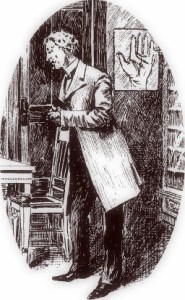
Dr. Maxwell Dean appeared in Marie Corelli’s novel Ziska: The Problem of a Wicked Soul (Arrowsmith, 1897; Stone & Kimball, 1897). Marie Corelli was the pen name of Mary Mackay. Dr. Dean investigates a supernatural mystery as a specialist-detective (but not a doctor-detective because he’s not a medical doctor). Read more about the interesting contrast this novel offers to Marsh’s The Beetle and Stoker’s Dracula—two other occult detective novels from the same year—in “An Investigator in Psychic Forms: Marie Corelli’s Dr. Maxwell Dean.”
Dr. Abraham Van Helsing appeared in Bram Stoker’s novel Dracula (Archibald Constable, 1897). Multiple reprints are currently available. Van Helsing investigates a supernatural mystery as a doctor-detective.
Lady Mary “Molly” Merton appeared in Ada M. Jocelyn’s novel Lady Mary’s Experiences (F.W. White, 1897). Assisted by Veronica Lawrence, Lady Mary investigates a supernatural mystery with criminal roots as a specialist-detective (though she’s still fairly new at the job). This work is distinctive in that it features one of the rare women investigators, and—while Jocelyn does admirably at showing her character’s growth as an occult detective—the conclusion might be a let down to some. I discuss this “The Hurtful Finale of Ada M. Jocelyn’s Otherwise Interesting Occult Detective Novel.”
1898
Flaxman Low appeared in E. and H. Heron’s first series of short stories, run in the UK version of Pearson’s Magazine. The stories are “The Story of the Spainards, Hammersmith” (5.25 [Jan., 1898] pp. 60-69); “The Story of Medhans Lea” (5.26 [Feb., 1989] pp. 137-46); “The Story of the Moor Road” (5.27 [Mar., 1898] pp. 247-56); “The Story of Baelbrow” (5.28 [Apr., 1898] pp. 366-75); “The Story of the Grey House” (5.29 [May, 1898] pp. 473-82); and “The Story of Yand Manor House” (5.30 [June, 1898] pp. 582-91). The following year, Low appeared in E. and H. Heron’s second series of short stories run in the UK version of Pearson’s Magazine. The stories are “The Story of Sevens Hall” (7.37 [Jan., 1899] pp. 30-38); “The Story of Saddler’s Croft” (7.38 [Feb., 1899] pp. 176-85); “The Story of No. 1, Karma Crescent” (7.39 [Mar., 1899] pp. 259-67); “The Story of Konner Old House” (7.40 [Apr., 1899] pp. 430-39); “The Story of Crowsedge,” (7.41 [May, 1899] pp. 482-91); and “The Story of Mr. Flaxman Low” (7.42 [June, 1899] pp. 578-87). All twelve of Low’s stories reappeared in E. and H. Heron’s collection Ghosts: Being the Experiences of Flaxman Low (C.A. Pearson, 1899). Multiple reprints are currently available. E. and H. Heron were the pen names used by Kate Pritchard and her son, Hesketh. Low investigates supernatural mysteries as a specialist-detective.
1899
Enoch F. Gerrish appeared in Gelett Burgess’ short story “The Spectre House,” printed in Black & White (Christmas, 1899). It was reprinted in Harper’s Bazaar 33.1 (Jan. 6, 1900) p. 24 and The Evening Post 61.16 (Jan. 19, 1901) p. 1 of supplement). Gerrish reappeared in the short story “The Levitant,” a part of Burgess’ collection The Burgess Nonsense Book (Frederick Stokes, 1901, pp. 113-24), which includes “The Spectre House” (pp. 125-31). Gerrish next appeared in the short story “The Ghost-Extinguisher,” published in Cosmopolitan 38.6 (Apr., 1905) pp. 689-96 and reprinted in Humorous Ghost Stories (G.P. Putnam’s, 1921, pp. 51-66). Gerrish investigates supernatural mysteries as a specialist-detective.
Dr. Hardarce appeared in Arthur Conan Doyle’s short story “The Brown Hand,” published in The Strand 17.101 (May, 1899) pp. 499-508. It was reprinted in Doyle’s collection Round the Fire (McClure, 1908, pp. 287-307). This tale is included in Ghostly Clients & Demonic Culprits: The Roots of Occult Detective Fiction (Brom Bones Books, 2019). Hardacre investigates a supernatural mystery as a doctor-detective.
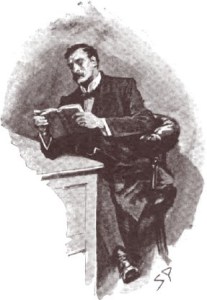
Stokeman appeared in Thomas Nelson Page’s short story “The Spectre in the Cart,” published in Scribner’s 26.2 (Aug., 1899) pp. 179-89. It was reprinted in Page’s collection Bred in the Bone (Scribner’s, 1904, pp. 63-102). Stokeman investigates a crime with supernatural elements as a novice-detective.
GO TO THE EARLY 1900s PAGE