
A Purposeless or Just Mischievous Ghost?
In the 1880s, train passengers traveling between Houston, Texas, and Dallas took the Houston and Texas Central Railroad. Along the way, they would travel between the towns of Palmer and Ferris. By 1890, such passengers might’ve encountered the spirit of a man who had lost his life between those towns, in a stretch that had, by then, become known as Ghost Hill. More likely, they would’ve been inconvenienced by the phantom, whose activities sometimes prompted the crew to bring the train to an unscheduled halt.

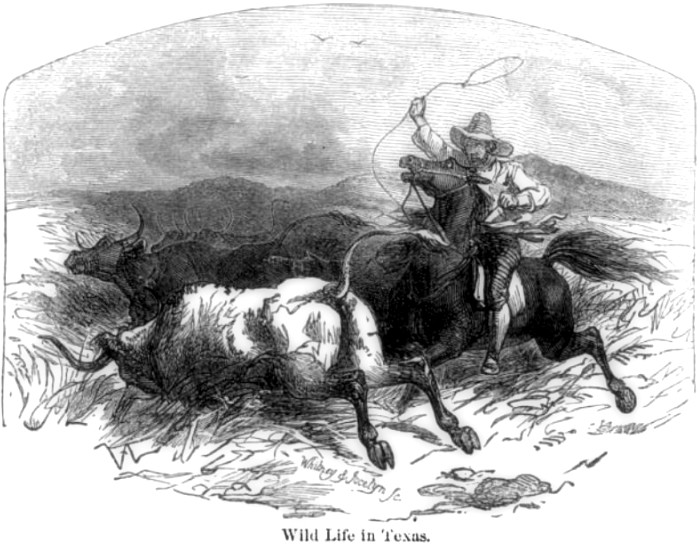
The article above — which also ran in papers from Washington to Maryland — shows that the phantom made itself known by repeatedly blowing the whistle and ringing the bell. Apparently, there wasn’t any particular reason for this. No train coming the other way. No damaged tracks ahead. Not even so much as a stray longhorn to consider. Unlike some railroad ghosts, this one seemed simply to be proclaiming its presence or maybe pulling a prank on former colleagues.
Speaking of pranks, a different 1890 article also refers to the Ghost Hill ghost. Titled “A Brakeman’s Ghost,” it was published in the Fort Worth Daily Gazette, but the reporter was less concerned with the paranormal phenomenon and more with how the spot’s reputation inspired a fireman to masquerade as the spirit and scare a co-worker. I’d be tempted to shrug off both articles as resulting from a prank — a tall tale told by trainmen — if Ghost Hill itself hadn’t been named for its alleged spectral visitor.
Searching for the Source
Sometimes, when researching these railroad hauntings, I’ve been able to confirm or, at least, lend credence to an accidental death said to account for the ghost. Other times, I haven’t. (In this regard, wrecks are easier than individual fatalities since they’re more “newsworthy.”) This case is especially difficult because that widely reprinted article says the restless victim was a “fireman,” the Daily Gazette article says he was a “brakeman,” and a 1906 article in The Waxahachie Daily Light cites “an Irishman who was killed there when the railroad was being built.” Somewhere along the way, the backstory morphed so that the haunting was attributed to three Mexican accident victims! None of these contradictory sources name names, so it’s tough to know what to search for.
Nonetheless, while hunting, I discovered that the tracks close to Palmer might have been a danger spot. That 1890 Daily Gazette piece places the fatality at “[a]bout eight years ago,” meaning in the neighborhood of 1882. Well, in 1881, the Dallas Weekly Herald reported that a freight train had wrecked “near Palmer.” But there were no injuries. A year later, with fiery wording, the same paper said that, “[j]ust beyond Palmer,” a sharp-eyed engineer narrowly avoided sabotaged tracks, thereby saving northbound passengers from robbery and almost certain death. Again, there’s nothing to account for a ghost. All that can be concluded from these articles is that the tracks in the area of Ghost Hill had a history that was, if not deadly, then marked by calamity and criminal intent.
Walking the Haunted Line Today
Tracks remain to this day between Palmer and Ferris, running roughly parallel to and west of Interstate 45. Presumably, this is also where the line ran in the 1800s. Ghost Hill was one of several names given to an unincorporated community now called Trumbull, which is pretty small. Conducting an investigation should be fairly easy, especially given how nicely Trumbull Road follows beside the tracks. Needless to say, any ghost hunters should proceed with extreme caution — those tracks don’t need any new ghosts.
And the investigation might be combined with a visit to nearby Waxahachie, where even a weekend paranormal investigator can enjoy a ghost tour and/or stop by the Munster Mansion, a recreation of the house depicted in The Munsters, that old TV show. However you arrange an outing to check up on the Ghost Hill ghost, please let us know your experience in the comments below.
Discover more “Railroad Hauntings You Can Still Visit” at the page for
After the End of the Line: Railroad Hauntings in Literature and Lore.
 BROM BONES BOOKS