Internal Combustion Crime
The Complete Crimes of the Motor Pirate is now available, completing the second phase of the Curated Crime Collection. This book combines G. Sidney Paternoster’s novel The Motor Pirate with his sequel, The Cruise of the Conqueror: The Further Adventures of the Motor Pirate. I’m 99% certain it’s the first time the two works have been published in a single volume, and I’m even more certain these are the only works Paternoster wrote about the dastardly title character.
And a decidely dastardly character he is! Any researcher digging into the history of super-villains should shove a shovel at these two novels. Along with a variety of skills that make “the Pirate” an almost-unstoppable criminal, he is a mad genius, especially when it comes to internal combustion engines!
The Joker, the Batmobile — But No Batman
In the first adventure, the Pirate invents an automobile that can reach speeds up to 100 miles per hour! Not a big deal these days, but this novel debuted in 1903 — when cars where in their infancy — and Paternoster’s explanation of how the remarkable engine works adds a dash of science fiction to what’s otherwise a tale of high adventure. In fact, this work ends in what might well be fiction’s very first high-speed car chase!
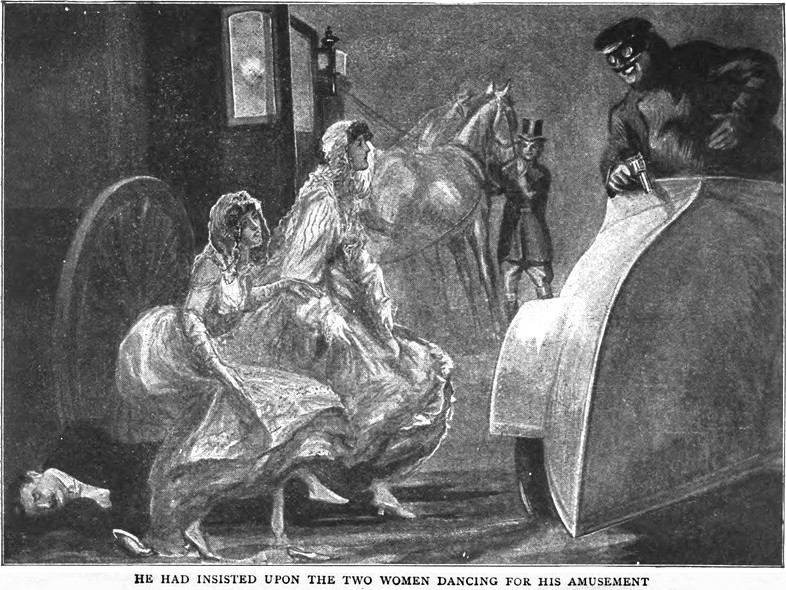
The sequel then moves from the roads of England to the waters between it and the Continent. One early ad cites a review describing this work as heralding the “introduction of the motor-boat into fiction.” In other words, Paternoster was spinning the steering wheel of crime fiction in a brand new direction.
As someone who enjoys charting the evolution of English, I really liked seeing how, in the early 1900s, the language of automobiles mirrored that of horse-drawn carriages. For instance, one doesn’t simply get out of a motorcar; one “dismounts” it. One escapes “upon” a car instead of in it. A flat tyre is an “injury,” almost as if it’s a horse’s sprained leg. Naturally, I left all these fun bits of history as is.
The Editor’s Cut
Now, like it or not, almost all novels have been shaped — if only slightly — by an editor. I try to use a light hand when editing old material. In this project, though, I had to deal with the first name of the Pirate inexplicably changing from the first novel to second. Had Paternoster forgotten it, or did he never imagine the two works being printed together? Similarly, what was once a bullet wound in the shoulder somehow reappears as a “broken arm.” Since readers of this edition are likely to read both novels back-to-back, I went ahead and made things more consistent.
In addition, while Paternoster was a master at telling a ripping adventure tale, he could’ve used a few editor’s tips when it came to writing a whodunit. Granted, this branch of mystery fiction was still coalescing in 1903. Think of how the earlier Sherlock Holmes stories don’t really give readers all the clues needed to “match wits” with the great detective. However, as first published, The Motor Pirate grants readers barely any challenge at all in unmasking the focal gentleman thief/murderer. At the same time, that identification seems absurdly difficult for the narrator, James Sutgrove, and Inspector Forrest of Scotland Yard, even though they have all the same clues as readers. These two characters form a sort of Watson and Holmes, with Sutgrove’s knowledge of cars proving valuable when Forrest is assigned to the case. To see them missing the blatant signs of the Pirate’s real identity is, well, a bit painful. So I tweaked a few passages to relieve that pain a little.
Join the Ride
That said, I never lost sight of the possibility that Paternoster might’ve wanted readers to be aware of who the dangerous character is well before his unsuspecting crime-solving duo. After all, that can be a nice way to build tension. So, yeah, you’ll probably still have a strong hunch of who the culprit is early on. Not to worry — it’s still a really fun adventure novel.
And since that culprit is confirmed in the first novel, the second one becomes much more a cat-and-mouse story — or a “howcatchem” — and Paternoster is very good at writing this. Editorially, I took a backseat in the Pirate’s motorboat and enjoyed the cruise.
Now you can join the ride, too! Scroll down to the section for The Complete Crimes of the Motor Pirate on this page for more information.
–Tim