Curiosity Is Not Conviction
It is wonderful that five thousand years have now elapsed since the creation of the world, and still it is undecided whether or not there has ever been an instance of the spirit of any person appearing after death. All argument is against it; but all belief is for it.
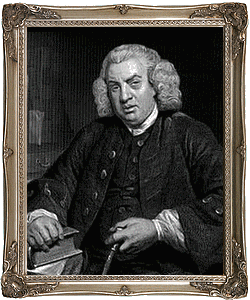
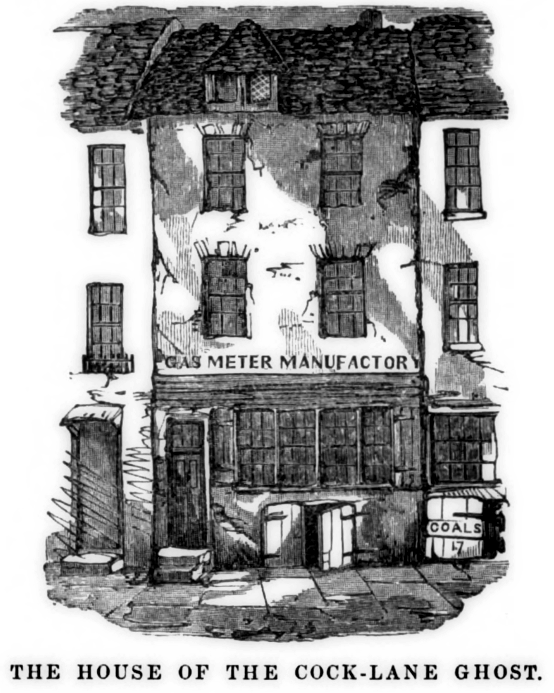
English author and lexicographer Dr. Samuel Johnson is frequently named as a prominent person who believed in ghosts. For instance, in Moby Dick (1851), Herman Melville writes: “Are you a believer in ghosts, my friend? There are other ghosts than the Cock-Lane one, and far deeper men than Doctor Johnson who believe in them.” A few years later, the anonymous author of “A Night in a Haunted House” (1855) had that tale’s narrator say: “Dr. Johnson declares it is impossible to account for the belief in ghosts among nearly all nations except by supposing the reality of their appearance.”
It turns out this is a misrepresentation of Johnson’s views on ghosts. In Life of Samuel Johnson, LL.D. (1791), James Boswell says the idea that ghosts must be real because they’re such a widespread phenomenon was expressed a character in Johnson’s novel Rasselas (1756). There, Imlac says:
There is no people, rude or learned, among whom apparitions of the dead are not related and believed. This opinion, which perhaps prevails as far as human nature is diffused, could become universal only by its truth; those that never heard of one another would not have agreed in a tale which nothing but experience can make credible.
But this is a fictional character, not the author. It’s a bit like confusing Victor Frankenstein for Mary Shelley. Miss Haversham for Charles Dickens. Sherlock Holmes for Arthur Conan Doyle. You see my point.
He Debunked Cock Lane
In reality, Johnson had a much more agnostic view, and Boswell takes a very clear stance against Johnson being a dupe when it came to ghosts. For evidence, the biographer points out that Johnson was part of a team that debunked the famous Cock Lane Ghost case. The Cock Lane “story had become so popular, that he thought it should be investigated.” Johnson was asked to join a group of, essentially, occult detectives. (At this point, I’m picturing an assemblage of properly powdered and wigged gentlemen ghost hunters, ideally accompanied by a dog named Sir Scooby of Doo.) Johnson later reported the ghost-hunting committee’s findings, saying that the child involved in the alleged haunting “has some art of making or counterfeiting particular noises, and that there is no agency of any higher cause.”
How to Validate a Ghost
Despite finding fraud in that particular case, Johnson appears to have kept an open mind about ghosts. He knew there could be psychological reasons for thinking one is being haunted — especially, a sense of shame — but there are also ways to tell if one is in the company of a genuine spirit. He explained that,
if a form should appear, and a voice tell me that a particular man had died at a particular place, and a particular hour, a fact which I had no apprehension of, nor any means of knowing, and this fact, with all its circumstances, should afterwards be unquestionably proved, I should, in that case, be persuaded that I had supernatural intelligence imparted to me.
Presumably, though, this had never happened to Johnson during his lifetime.
(For more on the Cock Lane ghost case,
visit The Cock Lane Ghost TARDIS page.)

 BROM BONES BOOKS