CURATED CRIME MOVIES MAIN PAGE
GREGORY: You seem to have accomplished quite a lot in one year.

HOLLAND: One superb year—just when I was beginning to believe I'd never achieve it. For twenty years, I've dreamed of a life like this. For nineteen of those years, Fate denied me the one contact essential to the success of all my plans. Still, I never lost sight of the goal, inaccessible as it often seemed to me when I was merely, uh—merely a non-entity.
At Large
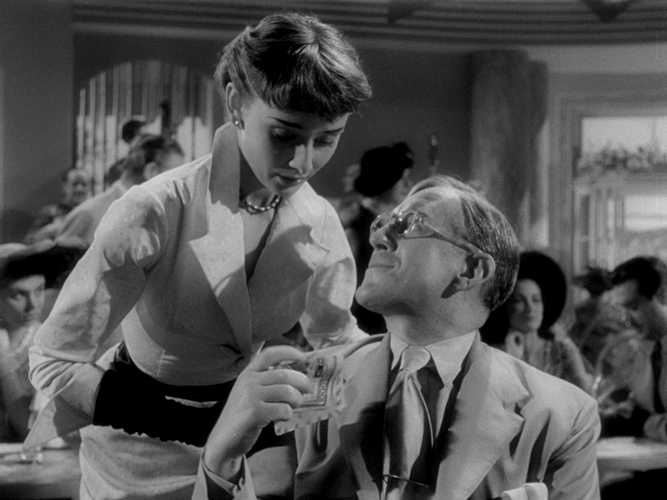
For about a decade following World War II, the UK’s Ealing Studios made a series of film comedies featuring characters and situations the original audience would have recognized as from something like their own world. Among the best loved of these movies is The Lavender Hill Mob (1951), directed by Charles Crichton and starring Alec Guinness and Stanley Holloway. (Early on, you’ll spot Audrey Hepburn in one of her first screen appearances, but it lasts less than a minute.)
The Lavender Hill Mob has been cited as a founding heist movie—perhaps the very first—laying the groundwork for popular films such as Ocean’s Eleven (1960, 2001) and The Thomas Crown Affair (1968, 1999).
Its critics’ score at Rotten Tomatoes, with 72 reviews, is a remarkable 100%.
Arresting Features
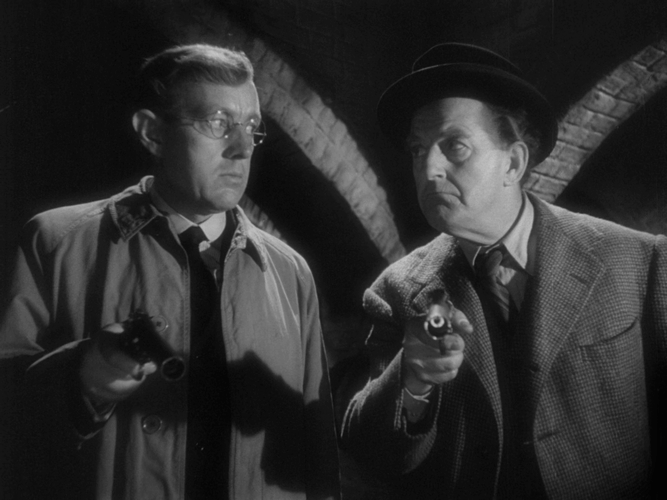
I found one of the most enjoyable elements of The Lavender Hill Mob to be Henry Holland, the frame narrator/central character played by Guinness. He’s an ordinary, middle-class bloke, happy to spend his evenings reading a hardboiled crime novel to his elderly landlady. However, his job at the bank involves overseeing the transport of gold bullion, nudging him to ponder how he might smuggle a vanload of the stuff out of England. The scheme falls into place when he meets Alfred Pendlebury, played by Holloway. He’s a sculptor similarly thwarted by financial constraints: instead of devoting his days to his art, he pays the rent by melting metal and molding souvenirs in a foundry. And many of these souvenirs are sold abroad.
Bingo! A heist is born!
Another treat is Critchton’s location shooting, a cinema technique Ealing Studios utilized fairly often. The shots of throngs headed to work in London, of that city’s post-Blitz buildings, or of the panorama from atop of the Eiffel Tower offer a fascinating glimpse into history. That said, I personally found the “suddenly slapstick” chase down the stairs of Paris’s famous tower (peppered with film effects that are clunky by today’s standards) a tad jarring for a story mostly told in a different comedic mode. That’s a minor quibble, though. Overall, the film is a delightful dramatization of people who succumb to an impulse that’s been felt by almost all of us. An impulse that’s been resisted by almost all of us.
In Cahoots
Guinness’s character reminded me very much another humble bank employee, one named Moberly Grimsy. He’s in Frederick Irving Anderson’s The Complete Crimes of the Infallible Godahl, a volume in the Curated Crime Collection. Grimsy is introduced in the last of the six short stories and returns as a key player in the novella that concludes the series. Unlike Holland, he’s a country boy trying to find connection in New York City. Both characters, though, break the law for the Greater Good. On the one hand, Grimsy pulls a fire alarm and runs from the cops to help a damsel in distress. On the other, Holland casts a Robin Hood-ish glow when saying he hopes he’s helped others with his ill-gotten wealth.
Also unlike Holland, young Grimsy isn’t the criminal mastermind. Instead, that role belongs to Anderson’s title character, a mysterious man going by the name Godahl. Even here, there’s an interesting parallel between the 1951 film and the 1913 prose fiction series. In “The Fifth Tube,” Godahl steals carefully guarded gold bullion by taking advantage of its meltability.
There probably aren’t enough similarities to make a case that Anderson’s short stories and novella were melted and remolded into Crichton’s film. Nonetheless, if you like one, you just might like the other. There’s more about Anderson’s Godahl tales here.
CURATED CRIME MOVIES MAIN PAGE


