WHAT WE KNOW ABOUT CROWE’S OTHER GHOST HUNT
Our house in Rutland Square was, if ever house was, haunted. Mrs. Crowe, authoress of 'Night Side of Nature,' used to visit us in quest of the ghost....
— Francis Pigou, Phases of My Life
Not Much There
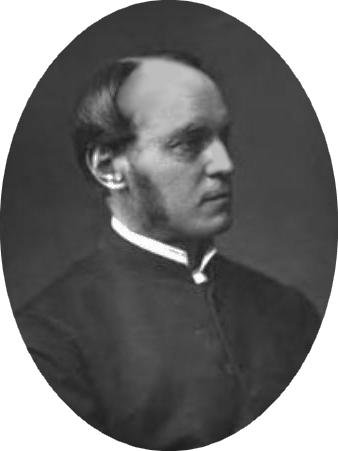
Nope, there sure isn’t much there. However, that passage above—that painfully brief passage—comes from an autobiography written by Francis Pigou (1832-1916). It provides a scrap of evidence that Catherine Crowe participated, however informally, in at least one more ghost hunt than the one she recounts in Ghosts and Family Legends (1859). As with so much of Crowe’s life—right down to her face!—I’ve struggled to unearth the details. While there’s a fair amount I can share regarding Pigou, I’ve found almost nothing at all to corroborate his curt claim that Crowe conducted a paranormal investigation of the house where he resided.
But here’s what I do have.
Crowe Lived in Edinburgh When Pigou Was There
It’s easy to conclude that Pigou lived in Edinburgh: his memoir says as much. In fact, it states that he was there from 1846 to 1851, when he was in his teens. He notes that his family lived in Rutland Square, and he studied at Edinburgh Academy, both still there.
Scholars take for granted that Catherine Crowe also resided in Edinburgh, but did she do so during those years? Many documents confirm she did. No doubt, there’s an easier way to verify this, but the sources linked below offer glimpses into her life and her social connections there. (I plan to add more sources when and if I come across them.)
- 1838: In her autobiography, Harriet Martineau describes a journey with a stop in Edinburgh, and on the next page, she says one of the noteworthy points of the trip was “it introduced me to Mrs. Crowe.” On the one hand, Martineau mentions several places she visited, so we can’t be absolutely certain she met Mrs. Crowe in that city specifically. On the other, she says that, thanks to Crowe, she became friends with Dr. Samuel Brown, a resident of Edinburgh. (As noted below, Crowe, Martineau, and Brown still socialized in 1852.)
- 1840: In a letter dated January 6, cofounder of The Edinburgh Review Sydney Smith wrote to “Mrs. Crowe,” saying: “I am very glad to find, my dear Mrs. Crowe, that you are so comfortably arranged at Edinburgh.” There’s nothing in the letter to confirm that Smith is chatting with Catherine Crowe, the author; however, in another letter, dated January 31, 1841, the editor offers feedback on Susan Hopley, Crowe’s novel debuting that year. I feel comfortable concluding that the addressee of the first letter is the same as the second.
- 1844/45: In his memoirs, Spencer T. Hall says that he dined that winter “at the table of Mrs. Crowe, in Edinburgh.” Hall was prominent in Mesmerism, a topic of much interest to Crowe.
- 1848: In a letter dated February 21, Ralph Waldo Emerson explains that he traveled to Edinburgh, where he was presented “especially to Mrs. Crowe, a very distinguished good person here.” In support of this being Catherine, Emerson goes on to explain that she was well connected to literary figures, including Thomas De Quincy (In Memorable Edinburgh Houses [2nd Ed., 1898], Oliphant Smeaton locates Crowe’s house at 2 Darnaway Street and repeats an anecdote about Crowe having to elbow a drowsy De Quincy during a lecture given by Emerson.)
- 1852: In a letter dated May 1, Samuel Brown says he lives “three miles from Edinburgh” and, after saying Harriet Martineau was coming to visit, adds “Mrs. Crowe is often with us.”
- 1954: In a letter dated March 9, Charles Dickens states that “Mrs. Crowe, usually resident in Edinburgh, … was discovered walking down her own street in Edinburgh, not only stark mad but stark naked, too.” Much was (and continues to be) made about this incident in Crowe’s life, but what matters here is that she’s shown to be living in Edinburgh.
Yes, ample evidence supports the idea that Crowe would’ve been well positioned to visit the Pigou family’s Rutland Square house “in quest of the ghost” sometime between 1846 and 1851. She wouldn’t have had to travel far to get there from Darnaway Street, and given that her famous On the Night Side of Nature was first released in 1848, she might well have had paranormal phenomena very much on her mind about then.
A Sliver of Light on a Possible Fib
As I say, Pigou provides scant detail regarding Crowe conducting a ghost hunt in Rutland Square. I would have to do a lot more than show the two were both in Edinburgh to lend it any real credence. So far, that’s all I can do.
Yet Pigou’s comment casts a sliver of light on the veracity of Crowe’s far more in-depth narrative about leading an investigation in an allegedly haunted house (one very likely in Edinburgh, too). Crowe, after all, wrote both non-fiction and fiction. That narrative appears in a book that’s framed as a series of fireside tales, a different storyteller relating a different ghost story each evening to pass the time in an entertainingly spooky way. Crowe writes:
[W]e began to tell ghost stories; and although some of the party professed an utter disbelief in apparitions, they proved to be as fertile as the believers in their contributions—relating something that had happened to themselves or their friends, as having undoubtedly occurred, or to all appearance, occurred—only, with the reservation, that it must certainly have been a dream.
There’s a chance that, when it came time for Crowe to tell her own ghost story, she shared a concoction of her fertile imagination, woven with enough verisimilitude to nudge her audience towards wondering just how much truth it holds. It’s possible her fireside tale is a big fib, and remember that, just like Pigou’s statement, I can’t find anything to corroborate Crowe’s own narrative.
Yet I think it’s improbable she made up the whole thing. The scrap of evidence at the top of this post comes from an objective viewpoint, and Pigou would have gained nothing by fabricating the claim. In that it implies Crowe went ghost hunting from time to time, her 1859 piece looks at least slightly more like an autobiographical anecdote and less like an entertaining bit of spooky fiction.
WHAT DO WE KNOW ABOUT CATHERINE CROWE’S GHOST HUNT?